Neha Patil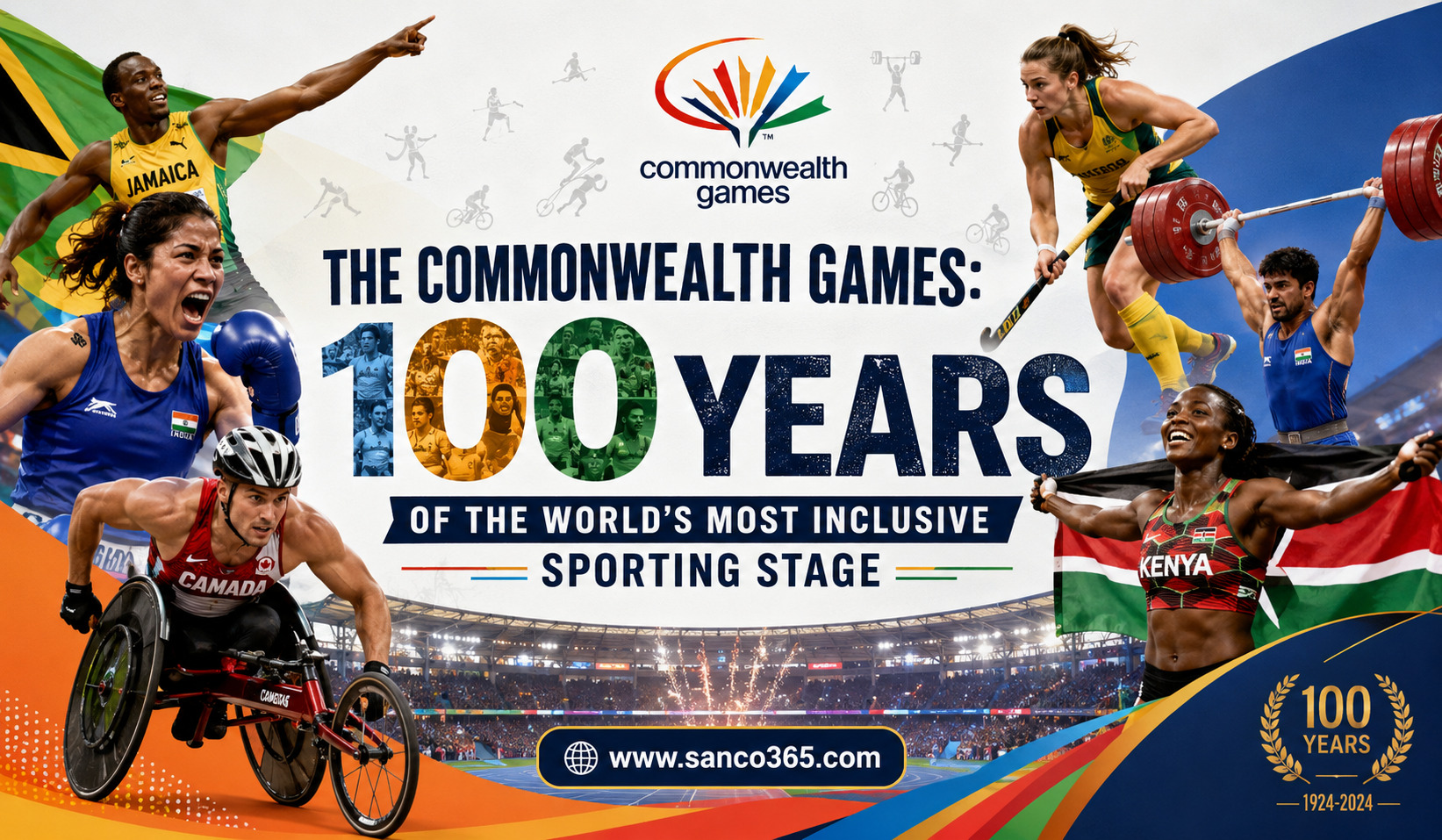
Known affectionally around the world as “The Friendly Games,” the Commonwealth Games stand as one of the most unique multi-sport spectacles in international athletics. Uniting over seventy nations and territories across six continents, the quadrennial event reflects a century of evolving geopolitics, social progress, and world-record athletic achievements. From its humble origins as an intra-empire exhibition to a modern platform leading the world in gender parity and integrated adaptive sports, this deep dive explores the fascinating history of the Commonwealth Games.
Origins and Evolution: From Empire to Commonwealth
The earliest precursor to the Commonwealth Games dates back to 1911, when the Inter-Empire Championships were held in London as part of the “Festival of Empire” celebrating the coronation of King George V. However, the inspiration for an official multi-sport event took shape following the 1928 Amsterdam Olympic Games. Canadian sportswriter and editor Melville Marks Robinson spearheaded the initiative to create a dedicated quadrennial meet centered on camaraderie and fair play.
The inaugural event, officially named the British Empire Games, took place in Hamilton, Ontario, in August 1930. Four hundred athletes from eleven nations competed across six sports, with competitors housed in classrooms near the stadium. As decolonization transformed global politics throughout the mid-20th century, the tournament undergone several name shifts to reflect its evolving identity before officially adopting “Commonwealth Games” in 1978.
Name Changes Across the Eras
- 1930–1950: British Empire Games
- 1954–1966: British Empire and Commonwealth Games
- 1970–1974: British Commonwealth Games
- 1978–Present: Commonwealth Games
Iconic Moments and Cultural Legacy
Over nearly a century of competition, the Commonwealth Games have delivered moments that defined global sports history. Beyond individual victories, the Games have repeatedly served as a stage for human perseverance, athletic innovation, and powerful cultural exchange.
One of the most famous races in track and field history occurred at the 1954 Vancouver Games. The men’s 1-mile final—dubbed the “Miracle Mile”—saw England’s Roger Bannister and Australia’s John Landy become the first two men to break the four-minute barrier in the same race, with Bannister capturing gold in dramatic fashion.
The King’s Baton Relay and Symbolism
First introduced at the 1958 Cardiff Games in Wales, the King’s (formerly Queen’s) Baton Relay has become one of the signature traditions of the event. Functioning similarly to the Olympic Torch Relay, a custom baton containing a message from the Head of the Commonwealth travels across every participating nation and territory.
The journey covers over 100,000 miles before arriving at the Opening Ceremony, where the message is officially removed and read aloud to announce the commencement of the Games.
Pioneering Inclusion: Para-Sports and Gender Parity
The Commonwealth Games have consistently set progressive benchmarks for inclusivity in world sport. Unlike the Olympic Games, which host separate Paralympic Games, the Commonwealth Games fully integrate Para-sports into the main event program.
Beginning at the 2002 Manchester Games, adaptive athletes competed as full team members, earning official points and medals for their respective nations on the main leaderboard. Furthermore, the 2022 Birmingham Games made history as the first major multi-sport event to feature more medal events for women than for men.
Key Milestones in Tournament Progressivity
- 1930: Debut of female competitors (limited exclusively to swimming events).
- 1994: Para-sport exhibition events introduced on the track and in the pool.
- 2002: Full integration of Para-athletes with official medal status.
- 2018: Achievement of equal medal events for male and female athletes.
- 2022: Historical breakthrough featuring 136 female medal events versus 134 male medal events.
Summary Table: Historical Timeline of Key Milestones
The structured overview below tracks the evolution, host cities, and landmark moments throughout Commonwealth Games history.
| Edition & Year | Primary Host City | Participating Nations | Historic Milestone / Significance |
| 1st Games (1930) | Hamilton, Canada | 11 Nations | Inaugural British Empire Games hosted in Ontario. |
| 5th Games (1954) | Vancouver, Canada | 24 Nations | Site of the iconic “Miracle Mile” sub-4-minute race. |
| 6th Games (1958) | Cardiff, Wales | 35 Nations | Introduction of the official Baton Relay tradition. |
| 11th Games (1978) | Edmonton, Canada | 46 Nations | Officially renamed the “Commonwealth Games”. |
| 16th Games (1998) | Kuala Lumpur, Malaysia | 69 Nations | First Games held in Asia; team sports introduced. |
| 17th Games (2002) | Manchester, England | 72 Nations | First full integration of Para-sports into the medal tally. |
| 19th Games (2010) | New Delhi, India | 71 Nations | First time hosted in a Commonwealth Republic nation. |
| 22nd Games (2022) | Birmingham, England | 72 Nations | First major tournament with more women’s than men’s events. |
Frequently Asked Questions
Which nations have attended every single Commonwealth Games?
Only six national federations have competed in every edition of the Commonwealth Games since 1930: Australia, Canada, England, New Zealand, Scotland, and Wales.
Why do individual Home Nations compete separately at the Commonwealth Games?
Unlike the Olympic Games—where Great Britain competes as a unified team—the Commonwealth Games permits the constituent countries of the UK (England, Scotland, Wales, and Northern Ireland) along with Crown Dependencies and territories to enter independent national squads.
Which country tops the all-time medal leaderboard?
Australia tops the all-time Commonwealth Games medal table, having finished as the leading medal nation in thirteen editions, followed by England and Canada.