Neha Patil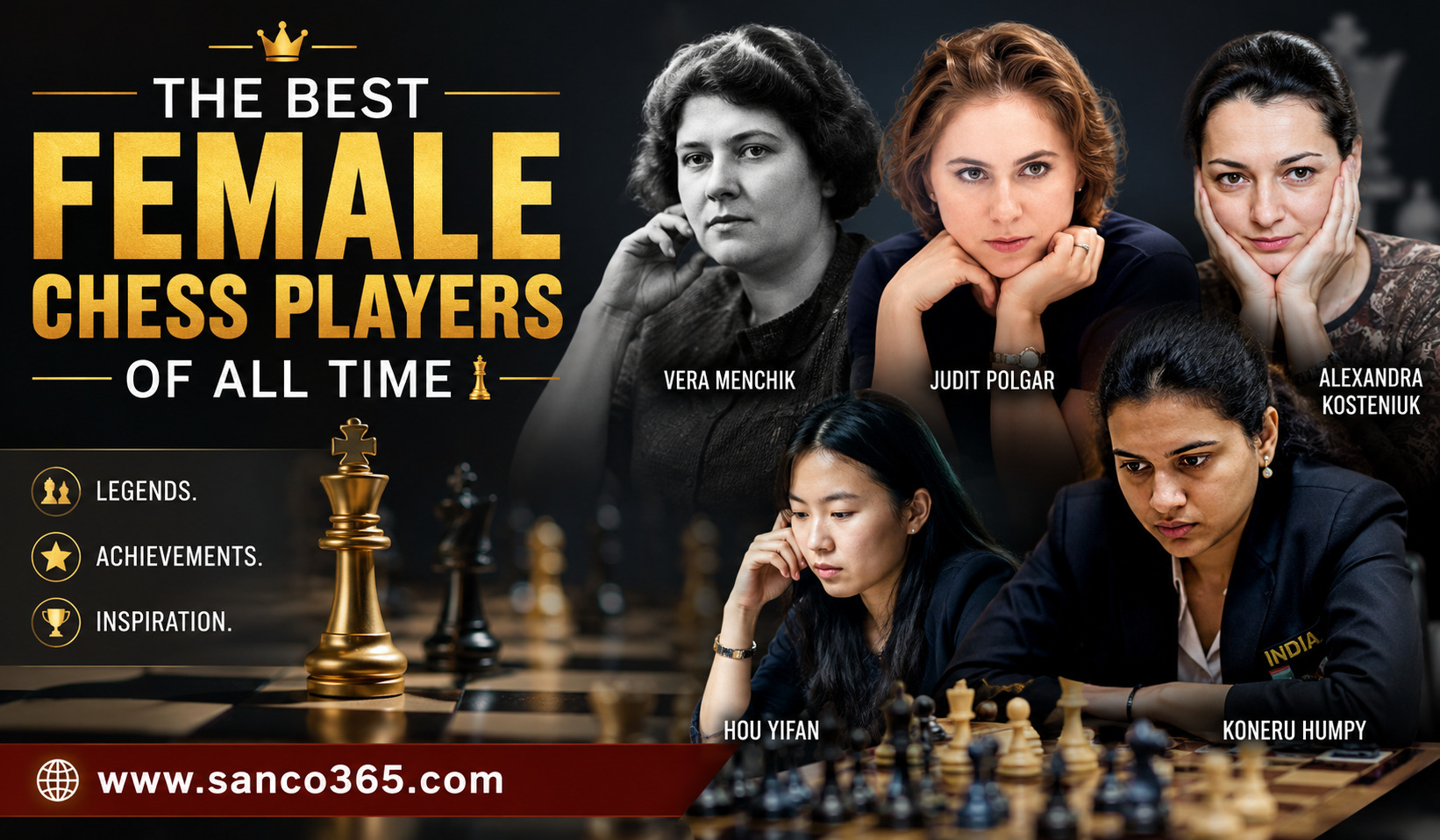
One number separates the greatest female chess player in history from everyone who has followed her: 2735. That is the peak rating Judit Polgar reached while regularly beating World Champions in open tournaments against men, and more than a decade after her retirement, no woman has come within 50 points of it. This post walks through the players who built women’s chess into what it is today, from the first official Women’s World Champion to the players chasing records right now.
Why Ranking Female Chess Players Is Not One Simple Question
Before naming names, it helps to separate what “best” actually means here, because the honest answer depends on which question you are asking. Are you asking who was strongest by peak rating? Who won the most Women’s World Championships? Who had the most influence on the sport’s growth? These are different questions with different answers, and the players below often top different lists depending on which lens you use.
Current rating tells you who is playing well right now. Peak rating tells you the highest level a player ever reached, regardless of when that happened. Longevity and title count tell a separate story about consistency and dominance across a career. Keeping these categories separate is the only honest way to compare eras that were decades apart in competition and opportunity.
The 2600 Club Is Smaller Than You Might Think
Only a handful of women in chess history have ever broken a 2600 FIDE rating, a threshold widely treated as the entry point to the sport’s true elite tier. Judit Polgar, Hou Yifan, Koneru Humpy, and Ju Wenjun are the clearest names in that group, and each of them appears prominently on any serious version of this list.
Vera Menchik: The Original Trailblazer
Vera Menchik became the first official Women’s World Champion in 1927, at a time when the idea of a woman competing seriously in chess was treated with open skepticism by much of the chess establishment. She held that title until her death in 1944, going undefeated across long stretches of major competition.
One of her most remarkable results came at Ramsgate in 1929, where she went undefeated across seven games while playing on a team that included Jose Capablanca, one of the strongest players in the world at that time. Menchik’s career mattered less for her rating, since formal rating systems did not exist in her era, and more for what she proved was possible. She played men regularly, held her own against strong opposition, and forced the chess world to take women’s participation seriously decades before that became normal.
Nona Gaprindashvili: Setting The Early Standard
Nona Gaprindashvili became Women’s World Champion in 1962 and, for a stretch of the early 1970s, was the only woman in the world with an official FIDE rating at all. She held the world title for sixteen years, a run of dominance that few players of any gender have matched.
Her legacy also includes being the first woman awarded the Grandmaster title outright, a milestone that opened the door for the generation that followed her to imagine competing not just among women but in open events against the sport’s strongest male players.
Maia Chiburdanidze: The Youngest Champion Of Her Era
Maia Chiburdanidze dethroned Gaprindashvili in 1978, becoming the youngest Women’s World Champion up to that point. She held the title until 1991, a reign of thirteen years that placed her among the most dominant women’s champions in the sport’s history.
Her peak international ranking reached 42nd in the world in 1985, an especially strong result given the depth of competition during that era of Soviet chess dominance, when the pool of elite players was arguably as deep as it has ever been.
Xie Jun: Breaking Chinese Chess Open
Xie Jun ended Chiburdanidze’s long reign in 1991, becoming the first Chinese player, male or female, to win a world chess title. Her matches against Chiburdanidze and later Zsuzsa Polgar drew massive audiences back home, and her success is widely credited with helping secure the government backing that turned China into one of the strongest chess nations in the world.
Without Xie Jun’s breakthrough, it is fair to wonder whether the current generation of Chinese stars, including Hou Yifan and Ju Wenjun, would have had the institutional support that helped them rise.
Susan Polgar: The First Of Three Remarkable Sisters
Susan Polgar became the top-rated woman in the world at just 15 years old and went on to win the Women’s World Championship from 1996 to 1999. She was the oldest of the three Polgar sisters, a family whose father famously set out to prove that world-class chess ability could be trained rather than simply inherited.
Susan’s success paved the way for her younger sisters, Sofia and, most significantly, Judit, whose achievements would go on to redefine what people believed was possible for a woman in competitive chess.
Judit Polgar: The Clearest Case For Greatest Ever
If the question is which woman reached the highest level of chess ever achieved, the answer is not close. Judit Polgar peaked at a 2735 FIDE rating, reaching as high as eighth in the world among all players, male or female, at a time when she was regularly playing in open tournaments rather than women-only events.
She defeated multiple reigning and former World Champions across her career, including Garry Kasparov, and she never once competed for the Women’s World Championship, choosing instead to build her entire career in open competition. She was the world’s top-rated woman continuously for roughly 25 years, a stretch of dominance that dwarfs every other player on this list.
Magnus Carlsen himself has pointed to Judit Polgar as an all-time great, and the gap between her peak and the next closest woman remains one of the largest in the sport’s history.
Hou Yifan: The Closest Anyone Has Come
Hou Yifan is the clearest answer to who comes second. She became a Grandmaster at 14, still the youngest female GM ever, and broke Chiburdanidze’s record as the youngest Women’s World Champion when she won the title at 16 in 2010. She would go on to win the title twice more, in 2013 and 2016, before shifting her focus toward open events.
Her peak rating of 2686 remains the second highest any woman has ever reached, and one of her signature results came at Biel in 2017, where she won the tournament outright with a performance rating of 2810 against a field that included a former FIDE World Champion and multiple other elite grandmasters. As of the FIDE women’s list from March 2026, Hou remains the highest rated woman in the world at 2596, still ahead of the current generation chasing her.
The Current Generation Still Writing Its Chapter
A handful of active players are building strong cases for where they will eventually land on this list. Koneru Humpy became the youngest woman ever to earn the Grandmaster title, doing so at just 15 years and one month old, and has reached a peak rating of 2623. Ju Wenjun, the reigning Women’s World Champion, has become the most successful multi-time champion of the current era outside of Hou Yifan herself.
Pia Cramling deserves a mention for a different kind of achievement entirely. Born in 1963, she earned her Grandmaster title in 1992 and was still competing at the elite level in 2026, at age 62, a run of longevity that may be unmatched by any player, male or female, in modern chess history. She has also won the Women’s Chess Olympiad individual gold medal five separate times between 1984 and 2008.
Frequently Asked Questions
Who is considered the best female chess player of all time?
Judit Polgar is widely considered the best female chess player in history, having reached a peak rating of 2735 and ranking as high as eighth in the world among all players.
Who is the highest rated female chess player right now?
As of the March 2026 FIDE women’s rating list, Hou Yifan is the highest rated active female player at 2596, ahead of Zhu Jiner and Lei Tingjie.
How many women have broken a 2600 chess rating?
Only a small handful of women have ever broken 2600, including Judit Polgar, Hou Yifan, Koneru Humpy, and Ju Wenjun, making that threshold one of the clearest markers of the sport’s female elite.
Did Judit Polgar ever play for the Women’s World Championship?
No, Judit Polgar never competed for the Women’s World Championship, choosing instead to build her entire career in open tournaments against the world’s top male players.