Neha Patil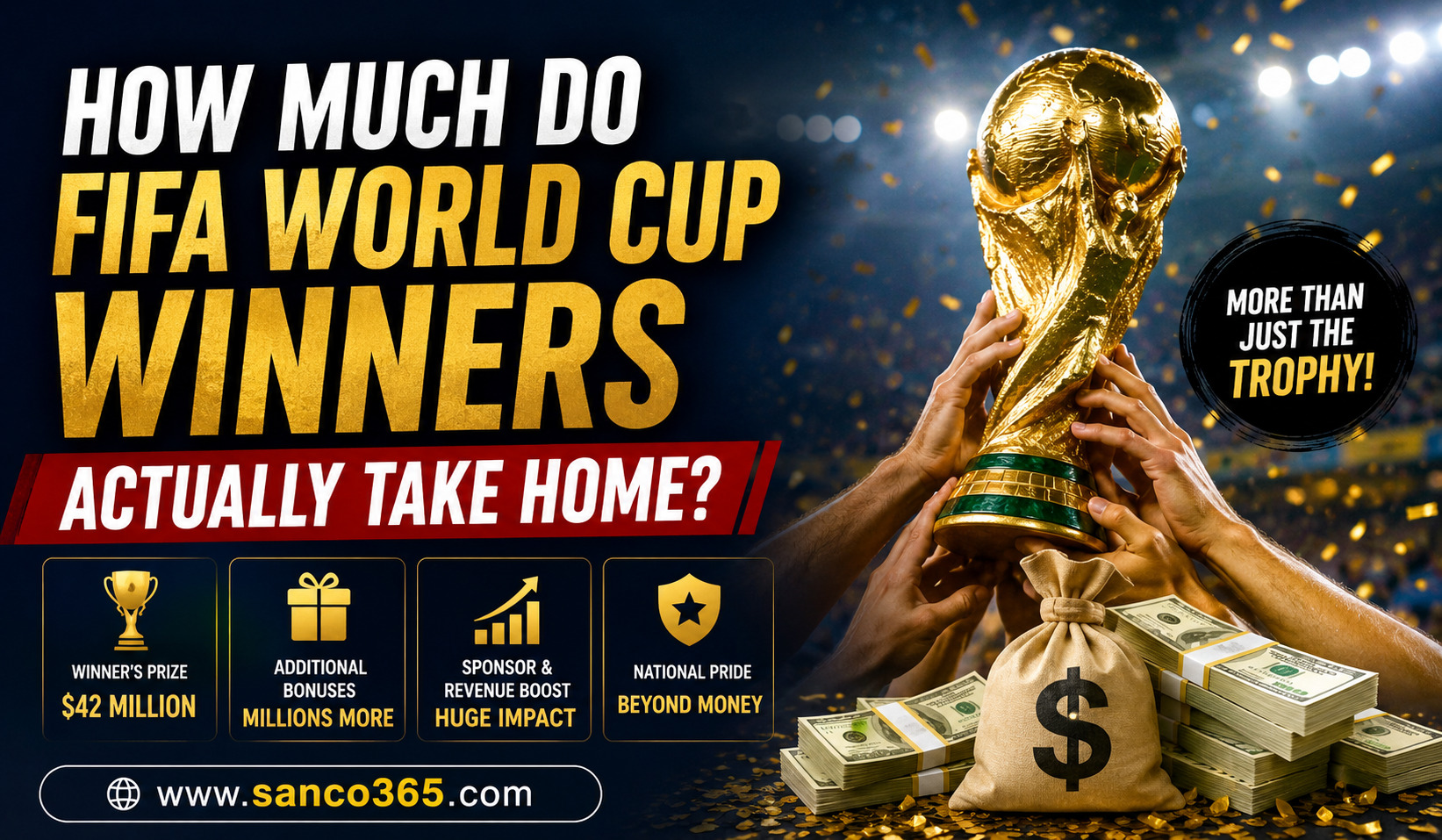
Lifting the FIFA World Cup trophy represents the absolute pinnacle of international sporting glory, but it also carries massive financial rewards. While multi-million dollar headline figures generate world media attention, the actual cash that lands in individual player bank accounts is governed by national association agreements, squad cuts, and taxation. This comprehensive breakdown explains where the World Cup prize money goes and how much winning athletes actually take home.
The Headline Purse: How FIFA Distributes Performance Money
FIFA allocates a multi-hundred million dollar overall prize purse for each men’s World Cup tournament. For the 2026 FIFA World Cup, FIFA set a record performance-based prize pool of 655 million dollars, with the winning national association taking home 50 million dollars. This reflects a substantial increase from the 42 million dollars awarded to Argentina at the 2022 tournament in Qatar and the 38 million dollars awarded to France in 2018.
However, FIFA does not write individual checks directly to the twenty-six players on the championship roster. The entire official purse is wired directly to the governing body or national football association of the victorious nation. The national federation then exercises full authority over how those funds are allocated across sports development, staff operational expenses, and player bonuses.
Federation Splitting and Domestic Revenue Distribution
Every national football association operates under its own financial structure. Most federations retain a major portion of the 50 million dollar jackpot to fund grass-roots youth development programs, training facility upgrades, and coaching staff salaries across all age divisions.
In many nations, the national governing body keeps between seventy and eighty percent of the primary payout. Consequently, only twenty to thirty percent of the total FIFA reward is reserved for direct player bonus pools.
Player Bonuses: What Champions Recieve Per Person
Before a tournament begins, national team player unions negotiate formal bonus agreements with their respective associations. These agreements dictate exact cash amounts paid to each squad member based on final tournament placement.
When Argentina captured the title in 2022, players received estimated individual bonuses ranging from 400,000 dollars to 1 million dollars per player. Similarly, when Germany won the 2014 World Cup in Brazil, the German Football Association paid a pre-negotiated bonus of 300,000 Euros (approximately 400,000 dollars) to each player on the squad.
National Federation Variations Across Global Powerhouses
- Spain: Spanish players negotiated a bonus of roughly 700,000 Euros per player prior to their 2010 victory in South Africa.
- France: French players received approximately 400,000 Euros each following their 2018 championship run in Russia.
- United States: Under a historic collective bargaining agreement, the United States Men’s and Women’s national teams pool their combined World Cup prize money and split eighty percent equally among players across both squads.
- England: The Football Association traditionally offers incentive packages worth over 500,000 Pounds per player for lifting the trophy.
Taxes, Club Cuts, and External Commercial Bonuses
The gross bonus figure negotiated with a national federation does not represent net take-home income. Athletes face substantial deductions in the form of national income taxes, local municipal levies, and agent commission fees.
Because top international stars live and work in high-tax jurisdictions across Europe or North America, direct bonus payments are frequently taxed at top marginal income rates exceeding forty to fifty percent. As a result, a 500,000 dollar bonus check can quickly reduce to 250,000 dollars in actual net income.
Endorsement Escalators and Personal Sponsorship Deals
While official federation payouts are taxed heavily, elite athletes often earn far greater sums through personal commercial endorsements. Major sportswear brands routinely include World Cup victory clauses in footwear and apparel contracts.
A marquee player who lifts the World Cup trophy can trigger multi-million dollar incentive clauses with private sponsors, far exceeding the official bonus provided by their national football association. Furthermore, winning a World Cup dramatically elevates a player’s market value ahead of club transfer windows.
Summary Table: World Cup Champion Prize Evolution
The structured overview below tracks how FIFA prize payouts for championship teams have grown over modern tournament history.
| World Cup Edition | Winning Nation | Total Champion Payout (USD) | Estimated Player Bonus Range |
| 2002 South Korea / Japan | Brazil | 9.0 Million | 100,000 to 200,000 USD |
| 2006 Germany | Italy | 20.0 Million | 250,000 to 300,000 USD |
| 2010 South Africa | Spain | 30.0 Million | 700,000 to 800,000 USD |
| 2014 Brazil | Germany | 35.1 Million | 400,000 to 450,000 USD |
| 2018 Russia | France | 38.0 Million | 400,000 to 500,000 USD |
| 2022 Qatar | Argentina | 42.0 Million | 500,000 to 1,000,000 USD |
| 2026 Canada / Mexico / USA | TBD | 50.0 Million | 600,000 to 1,200,000 USD |
Frequently Asked Questions
Does FIFA pay prize money directly to individual World Cup players?
No, FIFA does not pay players directly. FIFA transfers the total prize money to the national football association of each country. The association then distributes funds to players based on pre-negotiated contracts.
How much of the total prize money do players typically receive?
Most national federations allocate between twenty and thirty percent of the total FIFA prize money to player bonuses. The remaining seventy to eighty percent is kept by the association to support grassroots football, staff salaries, and infrastructure.
Do World Cup winning players have to pay tax on their bonus earnings?
Yes, individual player bonuses are subject to standard income tax regulations in the athlete’s country of residence. Top European players routinely face income tax rates of forty percent or higher on their World Cup earnings.