sanco365seo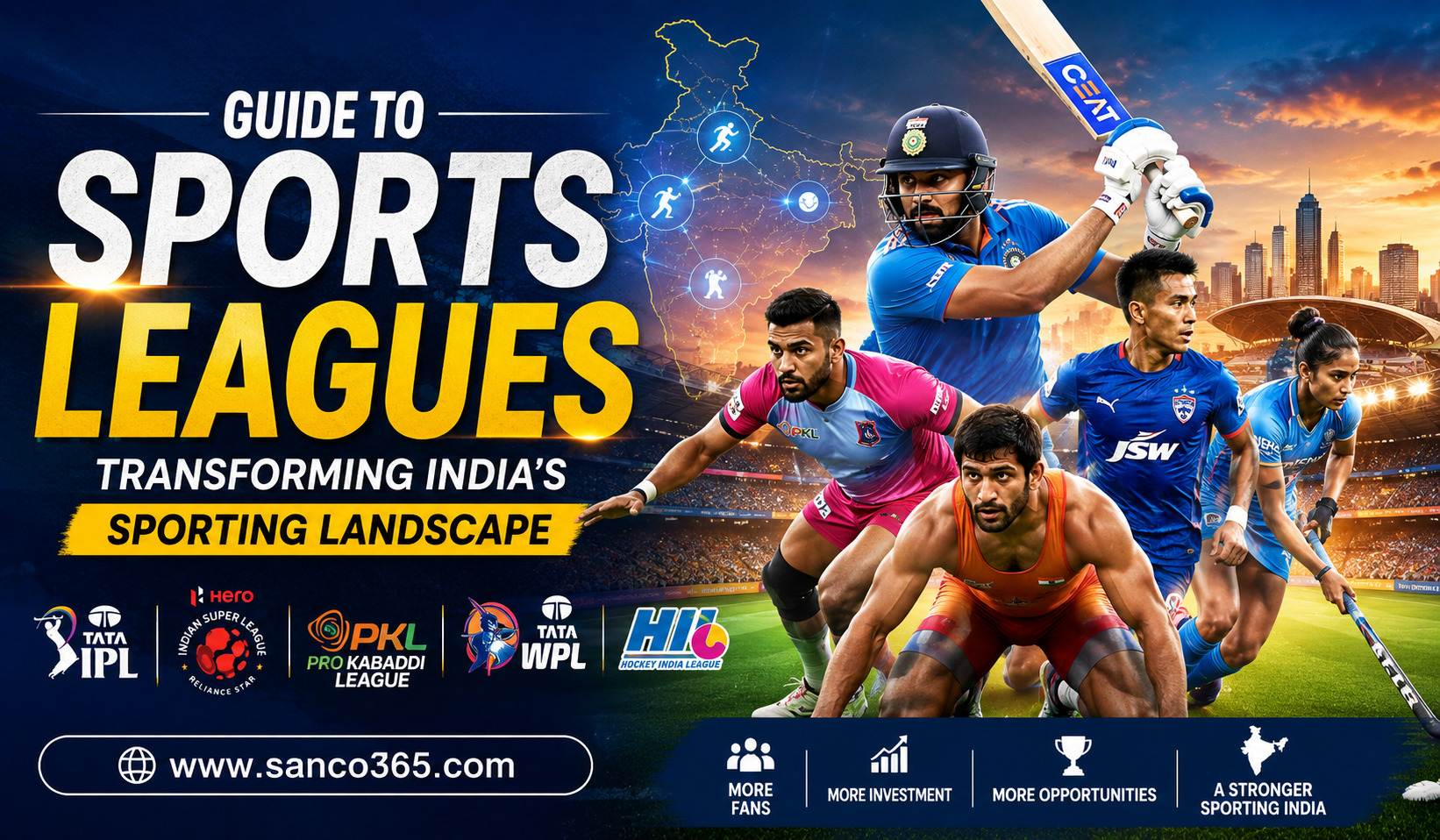
The traditional dominance of single-sport consumption in India has undergone a massive structural shift over the past two decades. Driven by corporate investments, world-class broadcast production, and city-based franchise models, multi-sport professional leagues have altered the national athletic landscape. From grassroots talent development to multi-million-dollar broadcast rights, these premier sports leagues are redefining career sustainability for Indian athletes while capturing prime-time viewership across millions of households.
The Franchise Revolution: Indian Premier League as the Blueprint
When corporate entities established the franchise-based sports ecosystem in India, few predicted how rapidly alternative disciplines would adopt the business architecture. High-octane presentation, international talent integration, and hyper-local fan bases created a sustainable financial engine that transformed athlete compensation overnight.
By combining entertainment value with athletic competition, franchise leagues proved that non-traditional sports could generate self-sustaining revenue streams. The success of this corporate blueprint provided a structural roadmap for contact, indoor, and Olympic sports across the country.
Indian Premier League (IPL) – The Commercial Titan
Launched in 2008, the Indian Premier League fundamentally altered global cricket economics. By pioneering the city-based franchise format mixed with private equity backing, the league elevated player auctions into major broadcast spectacles. Uncapped domestic players routinely earn contracts that dwarf traditional domestic match fees.
Beyond financial windfalls, the IPL created a high-pressure environment where young Indian cricketers regularly compete alongside and against the world’s elite international players. This daily exposure accelerated tactical development and fielding standards, directly strengthening India’s national team depth across all formats.
Women’s Premier League (WPL) – Elevating Women’s Sport
Following years of advocate demand, the launch of the Women’s Premier League marked a historic milestone for female athletes in Asia. Franchise valuations and broadcast rights sales generated record breaking financial figures for a women’s sports property.
The WPL has provided female domestic cricketers with professional contracts, top-tier sports science support, and global media exposure. The league acts as a major talent accelerator, bridging the gap between domestic circuit matches and international competition requirements.
Indigenous Combat Power: Pro Kabaddi League Redefining Mass Reach
While cricket possessed an established broadcast foundation, taking a mud-borne, traditional contact sport and modernizing it for primetime television represented a major commercial risk. The transformation of kabaddi stands as one of the greatest success stories in Asian sports marketing history.
Reimagining the game with high-intensity mats, music, rapid forty-minute match durations, and strategic innovation turned a regional pastime into India’s second most-watched professional league.
Pro Kabaddi League (PKL) – From Clay to Primetime Mat Supremacy
Debuting in 2014, the Pro Kabaddi League transformed rural raiding into an electrifying indoor sport. The introduction of innovative scoring elements like the “Do-or-Die Raid” and the “Super Tackle” forced teams to adopt aggressive tactical mindsets, eliminating passive play.
The financial impact on athletes has been transformative. Raiders and defenders from humble rural backgrounds now command high-value auction bids, turning full-time sport into a viable, lucrative career path. Furthermore, PKL’s international reach has elevated national team standards across Iran, South Korea, and East Asia.
Olympic Sport Accelerators: Badminton, Table Tennis, and Volleyball
Non-cricket disciplines historically struggled with limited competition schedules between major international games. Modern indoor franchise leagues resolved this issue by establishing annual competition windows that guarantee elite competition on home soil.
These league systems give rising domestic athletes direct access to international coaching techniques, data analytics, and high-stakes match situations without requiring continuous foreign travel.
Ultimate Table Tennis (UTT) and Premier Badminton League (PBL)
Ultimate Table Tennis introduced a fast-paced format where Indian paddlers share squad dugouts with top-twenty international stars. This daily interaction has demystified foreign opponents, contributing directly to India’s historic medal runs at Asian and Commonwealth events.
Similarly, world-class shuttlers have graced the Premier Badminton League, treating domestic audiences to high-speed mixed team ties. Competing alongside Olympic gold medalists has instilled tactical confidence in young Indian players stepping onto the international circuit.
Prime Volleyball League (PVL) – Private Ownership and Global Pathways
Operating under a private team-ownership model, the Prime Volleyball League brought structured professional contracts to indoor volleyball. Fast 15-point sets and the “Super Point” rule created a TV-friendly broadcast product that draws strong regional viewership.
Official global recognition from international governing bodies has opened doors for winning PVL franchises to represent India at Asian Club Championships. This international pathway gives domestic volleyball players direct exposure to world-class club competition.
The Football Landscape: Indian Super League and Ecosystem Growth
Building a sustainable professional ecosystem in global football requires balancing regional traditions with long-term infrastructure investments. The restructuring of domestic football provided a unified national league hierarchy.
Professional clubs now operate dedicated youth academies, sports science departments, and community outreach programs designed to cultivate technical talent from grassroots levels.
Indian Super League (ISL) – Modernizing National Football Structure
Established as the top tier of Indian football, the Indian Super League raised venue infrastructure standards, pitch management, and broadcast production across major sporting hubs. Traditional powerhouse clubs merged with corporate franchises, creating intense regional rivalries.
Strict requirements for youth setup integration mean ISL franchises actively scout talent through Under-13, Under-15, and Under-17 residential academies. This structured pipeline ensures a steady flow of match-ready domestic prospects into senior squads.
Structural Impacts on the Broader Sporting Economy
The explosion of professional franchise leagues has generated an expansive sports ecosystem beyond active playing rosters. Professionalization creates diverse employment avenues across technical, operational, and medical disciplines.
* Sports Science Integration: Professional franchises employ dedicated strength coaches, performance analysts, and sports physiotherapists.
- Grassroots Scouting Networks: Leagues incentivize team owners to build talent identification pipelines across rural and tier-two cities.
- Broadcast and Digital Media Expansion: Multi-language commentary feeds and digital streaming platforms have created hundreds of specialized media roles.
- Infrastructure Upgrades: Municipal indoor arenas and outdoor stadiums undergo regular renovations to meet international broadcast lighting and seating standards.
Comparison Matrix: India’s Premier Professional Leagues
The comparative table below outlines the operational profile, primary sports discipline, and core impact of India’s leading sports leagues.
| League Name | Discipline | Launch Year | Core Ecosystem Impact |
| Indian Premier League | Cricket | 2008 | Globalized cricket broadcast valuations and athlete compensation. |
| Pro Kabaddi League | Kabaddi | 2014 | Modernized a traditional sport into a primetime TV powerhouse. |
| Indian Super League | Football | 2013 | Standardized stadium infrastructure and mandatory youth academy pipelines. |
| Women’s Premier League | Cricket | 2023 | Established top-tier commercial sustainability for women’s team sports. |
| Prime Volleyball League | Volleyball | 2022 | Private franchise ownership with direct pathways to international club cups. |
| Ultimate Table Tennis | Table Tennis | 2017 | Pitted domestic paddlers against world top-twenty stars in annual ties. |
Frequently Asked Questions
Which sports league in India generates the highest broadcast revenue?
The Indian Premier League generates the highest broadcast revenue by a significant margin. Its media rights valuations place it among the most lucrative professional sports properties per game globally.
How have professional leagues helped non-cricket athletes in India?
Professional leagues provide non-cricket athletes with stable annual contracts, access to elite sports science staff, and regular exposure to international opponents. This financial stability allows athletes to pursue sports as a full-time career.
What makes the Pro Kabaddi League format so successful on television?
The Pro Kabaddi League succeeded by shifting the sport onto high-visibility indoor mats, enforcing a fast forty-minute match clock, and introducing high-stakes scoring rules like Do-or-Die raids that keep broadcast pacing relentless.
Do domestic franchise leagues assist in Olympic talent preparation?
Yes, leagues in sports like table tennis, badminton, and wrestling directly aid Olympic preparation. Facing top international talent on home soil builds tactical familiarity and psychological confidence under pressure.