sanco365seo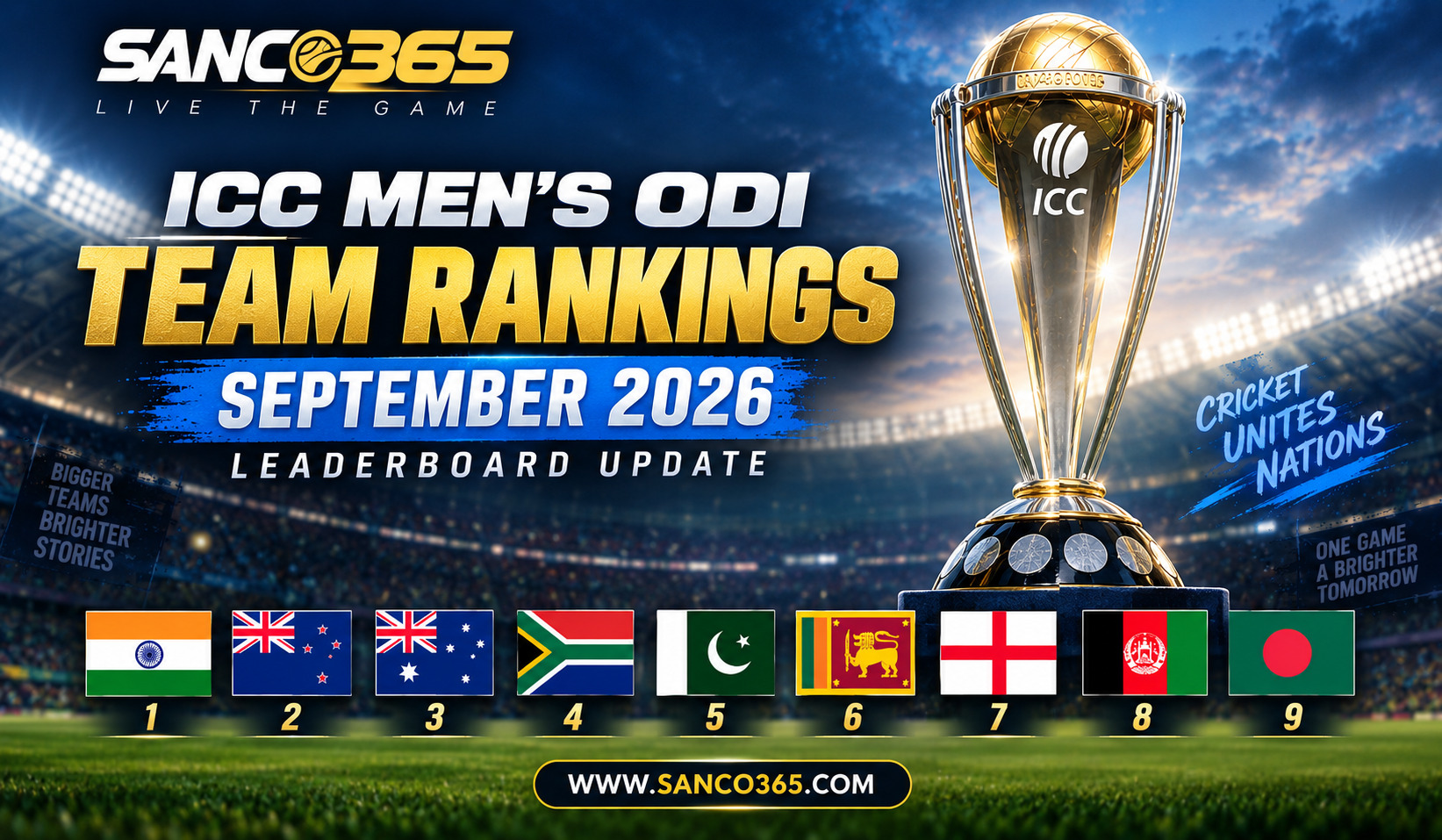
Overview of International Fifty Over Leaderboards in September
Fifty-over cricket demands incredible consistency and tactical precision from every national team. Tracking team performance across home and away series provides fans with clear insight into international form.
The ICC Men’s ODI Team Rankings reflect how national squads compete against top opponents across the globe. Recent international results have created fresh movements across the official leaderboard this month.
Understanding these official ratings helps supporters measure progress before upcoming international tournaments. This article breaks down the updated standings, rating shifts, and top individual player statistics in detail.
International fifty-over matches require balanced team compositions and deep tactical planning. National sides must deliver strong top-order batting and disciplined bowling to earn full series victories.
Winning matches on foreign soil gives teams significant rating advantages under the official scoring system. Every completed bilateral series alters total point tallies and influences positional updates. Consistent series victories determine global dominance in modern white-ball cricket.
Subcontinent conditions and bouncy overseas tracks presented unique challenges for touring squads recently. Spinners dominated dry pitches while fast bowlers utilized seam movement under lights during evening sessions.
These varied playing environments triggered frequent updates across the top ten table. Fans track these movements closely to measure squad depth and long-term progress.
Squad rotation strategies also played a crucial role in recent international match results. Developing young talent while preserving veteran stars helps nations maintain competitive rating totals.
Latest Standings in the ICC Men’s ODI Team Rankings
The official system measures match wins, opposition strength, and overall series outcomes over multi-year cycles. Points accumulate after every completed international fixture between recognized member nations.
Here is the complete table showing the top ten teams according to official cricket rating points and standings.
| Rank | Team | Matches | Points | Rating |
| 1 | India | 33 | 3841 | 116 |
| 2 | New Zealand | 35 | 3809 | 109 |
| 3 | Australia | 29 | 2965 | 102 |
| 4 | South Africa | 28 | 2855 | 102 |
| 5 | Pakistan | 32 | 3215 | 100 |
| 6 | Sri Lanka | 36 | 3470 | 96 |
| 7 | England | 31 | 2898 | 93 |
| 8 | Afghanistan | 28 | 2565 | 92 |
| 9 | Bangladesh | 39 | 3251 | 83 |
| 10 | West Indies | 34 | 2624 | 77 |
Asian teams hold three spots inside the elite top five positions on this chart. Competition remains tight between teams occupying third through fifth positions on the leaderboard. India holds the top spot with an impressive rating buffer over second-placed New Zealand.
Small rating gaps mean that a single series outcome can shift team positions quickly. Squads must sustain high performance levels to defend earned positions against hungry chasing nations.
Bilateral series in Asia and Europe pushed point totals in opposite directions this season. Fast-moving schedules ensure that every team stays within range of positional adjustments.
Top Team Performances and Rating Point Shifts
India continues to reign supreme at the peak of the international table. Strong top-order run production and disciplined death bowling helped the squad secure crucial series victories.
New Zealand sits comfortably in second position following exceptional displays at home and away. Balanced bowling attacks and composed middle-order batting allow the Kiwis to keep pressure on the leader. New Zealand maintains second position with steady rating contributions from reliable key players.
Australia holds third spot after engaging in fierce limited-overs battles against top opponents. Fast-bowling depth and explosive power hitting keep the multi-time world champions near the top tier.
South Africa mounted an impressive campaign to climb into fourth spot on equal rating points with Australia. Powerful top-order batting and pace-bowling depth fueled their steady rise up the leaderboard.
Pakistan remains right behind in fifth position with a solid rating of 100 points. Talented fast bowlers and steady middle-order contributors ensure Pakistan stays within touching distance of the top four.
Top nations face constant pressure to maintain these point levels over multi-series stretches. A single series slip can cause a notable drop in total rating points.
Middle Tier Battles Across International Cricket Standings
Sri Lanka occupies sixth place on the leaderboard through consistent home series performances. Wrist spinners and adaptable middle-order batters give Sri Lanka strong tactical balance on turning tracks.
England holds seventh position while reforming their limited-overs lineup following recent player transitions. Aggressive batting strategies and versatile all-rounders keep England dangerous against any opponent. Sri Lanka leads the middle group with ninety-six rating points on the chart.
Afghanistan claims eighth spot on the table with ninety-two rating points. World-class spin bowlers and aggressive top-order batters allow Afghanistan to challenge established powerhouses consistently.
Bangladesh sits in ninth spot following hard-fought fixtures against competitive opposition. Reliable spin units and lower-order fighting spirit help Bangladesh protect their top ten status.
West Indies rounds out the elite top ten group with seventy-seven rating points. Athletic fielding and raw hitting power give the Caribbean side strong potential to rise higher.
The point gaps in this middle group remain narrow across all official updates. Squads that put together back-to-back series wins will climb rapidly over coming months.
Global Individual Stars and Top Ten Player Rankings
Individual player form directly influences how effectively national teams collect series points on the field. World-class batters construct game-winning foundations that elevate entire squad performances.
Here is the table showing the current top ten individual batters according to official ODI team ratings and player form.
| Rank | Player Name | Country | Rating Points | Primary Role |
| 1 | Shubman Gill | India | 801 | Opening Batter |
| 2 | Daryl Mitchell | New Zealand | 794 | Middle-Order Batter |
| 3 | Virat Kohli | India | 767 | Top-Order Batter |
| 4 | Rohit Sharma | India | 758 | Opening Batter |
| 5 | Ibrahim Zadran | Afghanistan | 719 | Opening Batter |
| 6 | Babar Azam | Pakistan | 689 | Top-Order Batter |
| 7 | Joe Root | England | 674 | Middle-Order Batter |
| 8 | Shai Hope | West Indies | 673 | Wicketkeeper Batter |
| 9 | Charith Asalanka | Sri Lanka | 659 | Middle-Order Batter |
| 10 | Harry Tector | Ireland | 653 | Middle-Order Batter |
Indian batters feature prominently with three players inside the top four positions. Shubman Gill leads all global batters with eight hundred and one rating points.
Daryl Mitchell holds second position through consistent run scoring across multiple series formats. Veteran leaders Virat Kohli and Rohit Sharma continue to deliver heavy run tallies for India.
Rising talent Ibrahim Zadran represents Afghanistan inside the elite top five group. Players from Ireland, West Indies, and Sri Lanka prove that high-quality batting spans every corner of international cricket.
Individual consistency directly boosts team confidence during tough chase conditions. Star batters turn tight matches into decisive team rating victories.
Match Factors Influencing ICC Men’s ODI Team Rankings
Understanding the official calculation process clarifies why standings change after international series conclude. Ratings reward teams for defeating higher-ranked opponents rather than collecting simple match statistics.
Defeating a top-ranked squad yields higher rating points than beating a lower-ranked side. Away series victories carry extra weight inside the mathematical formula used by governing authorities.
Losing matches against lower-ranked teams results in significant point deductions for established leaders. Sustained dominance over multiple series protects team buffers against sudden drops.
Weighted calculations place greater emphasis on recent international matches compared to older fixtures. Matches played over the past twelve months carry full percentage weight in total calculations.
Results from preceding seasons carry reduced weight to reflect current tactical capability accurately. This dynamic scoring structure keeps global leaderboards fresh and fair for all competing nations.
Pitch conditions and home ground choices also play hidden roles in these outcomes. Teams that adapt quickly to unfamiliar conditions collect maximum mathematical rewards.
Strategic Importance of Team Ratings for Major Tournaments
Official rankings dictate crucial tournament seeding positions for upcoming global events. Top-ranked teams secure favorable group placements during international championship draws.
High ratings also guarantee direct qualification pathways for premier multi-nation events. Lower-ranked nations must navigate tough qualification tournaments to earn major event spots. Direct tournament qualification depends heavily on ranking status leading up to key cutoff dates.
National boards schedule bilateral series strategically to accumulate maximum rating points before major deadlines. Home series on tailor-made pitches provide teams with ideal opportunities to boost point totals.
Captains manage bowler workloads carefully during long seasons to maintain optimal match readiness. Field performance directly impacts commercial broadcast interest and stadium ticket sales worldwide.
Supporters follow national standing shifts closely as their favorite teams build toward major world trophies. Every single match contributes to long-term ranking trajectories and international prestige.
Strategic preparation will separate the top contenders from the rest of the field in coming series. Pressure will intensify as cutoff dates draw near for global event seedings.
Key Takeaways
- Leading ODI Squad: India maintains first position on the global table with 116 rating points.
- Top Runner-Up: New Zealand holds second place with 109 rating points across thirty-five matches.
- Tight Middle Tier: Australia and South Africa share equal 102 rating points near the top four.
- Number One Batter: Shubman Gill occupies top spot among global batters with 801 rating points.
- Weighting Rule: Recent matches played within twelve months carry maximum weight in calculations.
FAQs
Which country currently holds the number one spot in the ICC Men’s ODI Team Rankings?
India holds first place in the official standings with one hundred and sixteen rating points.
How often do official team ratings get updated by the governing body?
Official team ratings refresh after every completed international fifty-over match series.
Does winning an away series grant more rating points than winning at home?
Winning away matches grants higher rating points because defeating hosts in foreign conditions represents a greater competitive achievement.
Which individual batter leads the global ODI batting leaderboard?
Shubman Gill leads all global batters with eight hundred and one rating points.
Why do older international match results carry less weight in calculations?
Older match results carry reduced weight to ensure that current team form determines global standings.
Summary of Global ODI Team Ratings
International fifty-over cricket continues to produce thrilling contests and tight leaderboard battles across all regions. India protects first place with strong performances, while New Zealand and Australia maintain constant pressure behind them. Middle-tier nations like Afghanistan and Sri Lanka demonstrate that squad depth can shift global standings rapidly.
Tracking the ICC Men’s ODI Team Rankings provides supporters with valuable insight into national form before major international events. Every completed bilateral series brings fresh opportunities for teams to collect points and move higher. Fans can look forward to more exciting fifty-over battles as national squads compete for global dominance.