sanco365seo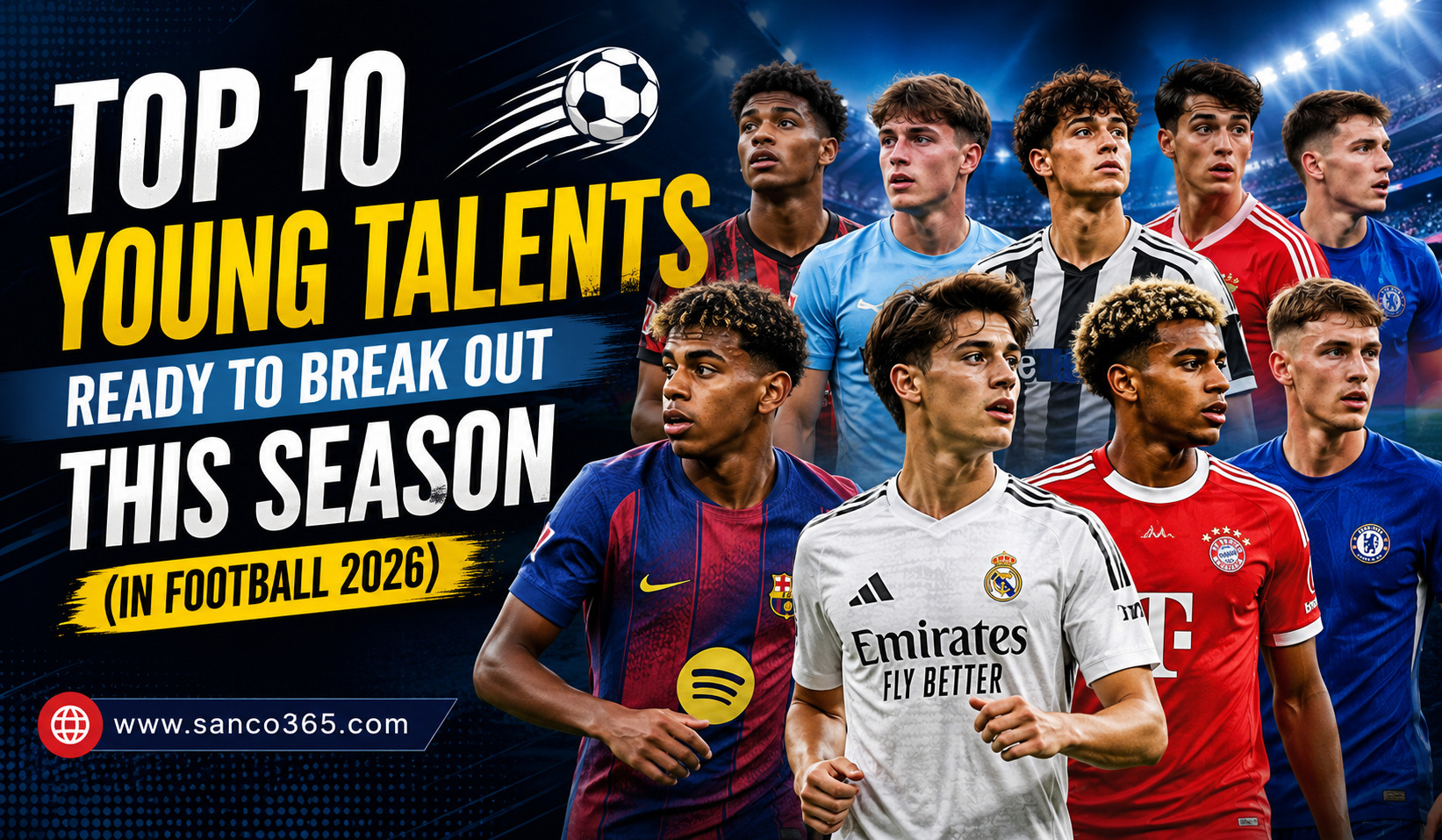
European football is entering a genuine changing of the guard, and the numbers back it up. Nearly fifty players aged 20 or under were called up across the 48 nations competing at this summer’s World Cup, a reminder that the next generation is no longer waiting in the wings. As the 2026-27 season kicks off, here are the ten young football talents most likely to turn heads across Europe’s top leagues.
Why This Generation Feels Different
Every era of football produces hyped prospects, but the current wave carries a specific kind of urgency. Clubs are handing first team minutes to teenagers earlier than ever, partly because scouting and data analysis have gotten sharper, and partly because the financial rewards of developing a genuine wonderkid rather than buying an established star have never been higher.
There is also a simple truth about breakout football stars: talent alone rarely decides who makes it. A successful loan spell, a tactical shift that suits a player’s strengths, or a long term contract signal that a club is building around someone specific. These quiet signals matter just as much as raw ability when trying to predict who actually breaks through versus who stalls out in academy football.
That unpredictability is part of what makes this list genuinely interesting. Some of these names are already regular starters for their clubs. Others are still waiting for their moment, but the signs pointing toward a breakout season are already there.
Lamine Yamal: Already Operating At A Different Level
It feels almost unfair to still call Lamine Yamal a breakout prospect given how established he already is, but his trajectory keeps climbing regardless. The Barcelona winger has become a key figure for both his club and the Spain national team, and his combination of speed, tight dribbling, and decisive game-changing moments have drawn constant comparisons to a young Kylian Mbappe.
His numbers back up the hype. He set a Barcelona record for reaching 82 career goal contributions faster than both Lionel Messi and Cristiano Ronaldo managed at a comparable career stage, and he opened the 2025-26 Champions League campaign with two goals and two assists across his first five matches. If he stays healthy, this could be the season he becomes a genuine Ballon d’Or contender rather than simply a future one.
Warren Zaire-Emery: PSG’s Homegrown Engine Room
At just 20 years old, Warren Zaire-Emery already owns a trophy cabinet most veteran professionals never come close to matching. He holds the distinction of being the youngest player ever to feature in two Champions League finals, a remarkable achievement for a midfielder who came through PSG’s own academy rather than arriving via a big money transfer.
What makes Zaire-Emery worth watching closely this season is his continued development as PSG’s midfield conductor. Clubs rarely build long term plans around a player this young unless the tactical trust is already extremely high, and PSG’s willingness to lean on him in the biggest matches suggests his role is only going to keep expanding.
Bayern Munich’s Teenage Wingers: Lennart Karl And F. Mike
Bayern Munich has developed a genuine pipeline of teenage attacking talent, and F. Mike is the latest name pushing through. He made his Bayern debut against Hoffenheim just days after turning 17, becoming the club’s third-youngest ever debutant behind only players like Karl and Jamal Musiala. He followed that with three more Bundesliga appearances and a Champions League debut against Club Brugge, all built on a direct, unpredictable dribbling style that has fast tracked him through Bayern’s ranks.
A few reasons Bayern’s teenage pipeline keeps producing results:
- Head coach Vincent Kompany has shown a clear willingness to trust young players with real minutes rather than easing them in slowly
- Mike’s rapid rise mirrors the trajectory Karl and Musiala both took before becoming first team regulars
- Bayern’s Champions League depth allows younger players to gain continental experience without the full weight of Bundesliga title pressure on every appearance
Kennet Eichhorn: The Midfield Playmaker Leverkusen Is Building Around
Bayer Leverkusen has quietly developed one of the most technically gifted young midfielders in Germany. Kennet Eichhorn operates as a deep-lying playmaker whose composure and passing vision have already drawn praise from Leverkusen’s own management, with managing director Simon Rolfes calling him one of the best German talents in the club’s ranks.
Eichhorn’s game is built on control rather than explosiveness, which tends to be a more sustainable foundation for long term development than pure athleticism. Playmakers with genuine game management ability at a young age typically have longer, more consistent careers than pure pace and dribbling merchants, since their skill set ages far better as the physical gap with senior professionals closes.
Vuskovic: The Defender Croatia Is Already Trusting
Nineteen-year-old defender Vuskovic has emerged as one of the most talked about young center backs in Europe. Signed by Tottenham as a 16-year-old back in 2023, he could not officially move to the club until turning 18 due to transfer regulations, but a breakout loan spell in the Bundesliga during the 2025-26 season showcased his aggressive defensive play, sharp reading of the game, and genuine threat on attacking set pieces.
He has already become a starter for Croatia’s senior national team, a significant vote of confidence for a defender still teenager, and he now returns to Tottenham facing a genuine decision point about whether he stays and fights for a starting role or moves elsewhere for regular football.
Chelsea’s Brazilian Connection: Estêvão And Andrey Santos
Chelsea’s rebuild has leaned heavily on young Brazilian talent, and the early returns look promising. Estêvão has adapted quickly to English football, aided significantly by fellow countrymen Andrey Santos and Pedro Neto already being established at the club, and his contributions have helped push Chelsea back into the Premier League’s top four.
That kind of cultural and linguistic support system matters more than fans often realize when evaluating why some international signings hit the ground running while others take years to settle. Having teammates who understand both the football adjustment and the off-field transition can meaningfully speed up a young player’s integration into a new league.
Carlos Baleba: Brighton’s Engine Room Powerhouse
Brighton has built a reputation for developing and selling talent at significant profit, and Cameroon international Carlos Baleba fits squarely into that pipeline. His combination of physical power and ball-carrying ability out of midfield has made him one of the more coveted young holding midfielders in the Premier League, and continued strong form this season would likely put him firmly on the radar of Europe’s bigger clubs.
Cavan Sullivan: American Soccer’s Most-Watched Teenager
Cavan Sullivan carries a different kind of pressure than most names on this list. Widely considered perhaps the most talented young player to ever emerge from American soccer, he already has a deal in place to join Manchester City in the summer of 2027, despite being just 16 years old. His 2025 season with the Philadelphia Union did not go entirely to plan, with just 11 league appearances and only one start, a reminder that even the most hyped prospects face real growing pains.
That disappointing stretch makes this coming season a genuinely important one for Sullivan. How he responds to a difficult first taste of senior professional football will tell evaluators far more about his long term trajectory than the hype that surrounded his initial breakthrough.
What Actually Determines Who Breaks Through
Predicting which of these players fully arrives this season instead of stalling is genuinely difficult, and even experienced scouts get it wrong constantly. A few patterns tend to separate the players who follow through on their potential from those who do not.
- Consistent minutes rather than sporadic cameo appearances tend to be the clearest signal a club is building toward something
- A tactical setup that actually suits a player’s strengths matters more than raw talent alone
- Staying healthy through a full season remains the single biggest variable nobody can fully predict
- Confidence from senior national team call-ups often reflects insider knowledge that public rankings do not yet fully capture
FAQ: Common Questions About Football’s Next Generation
Who is considered the best young player in world football right now?
Lamine Yamal is widely regarded as the standout talent among young players currently in European football, given his combination of production, consistency, and impact at both club and international level.
What makes a young player likely to actually break out in a given season?
Consistent playing time, a tactical system suited to their strengths, and staying free of major injuries are the clearest indicators, more so than raw talent rankings or transfer fee speculation.
How many young players featured at the 2026 World Cup?
Roughly 48 players aged 20 or under were called up across the 48 competing nations, reflecting just how much young talent is currently being trusted at the highest level of international football.
Why do some highly rated wonderkids fail to live up to expectations?
Factors like inconsistent playing time, poor tactical fit, injuries, and the psychological pressure of premature hype can all derail a promising young player’s development, regardless of their raw talent level.