sanco365seo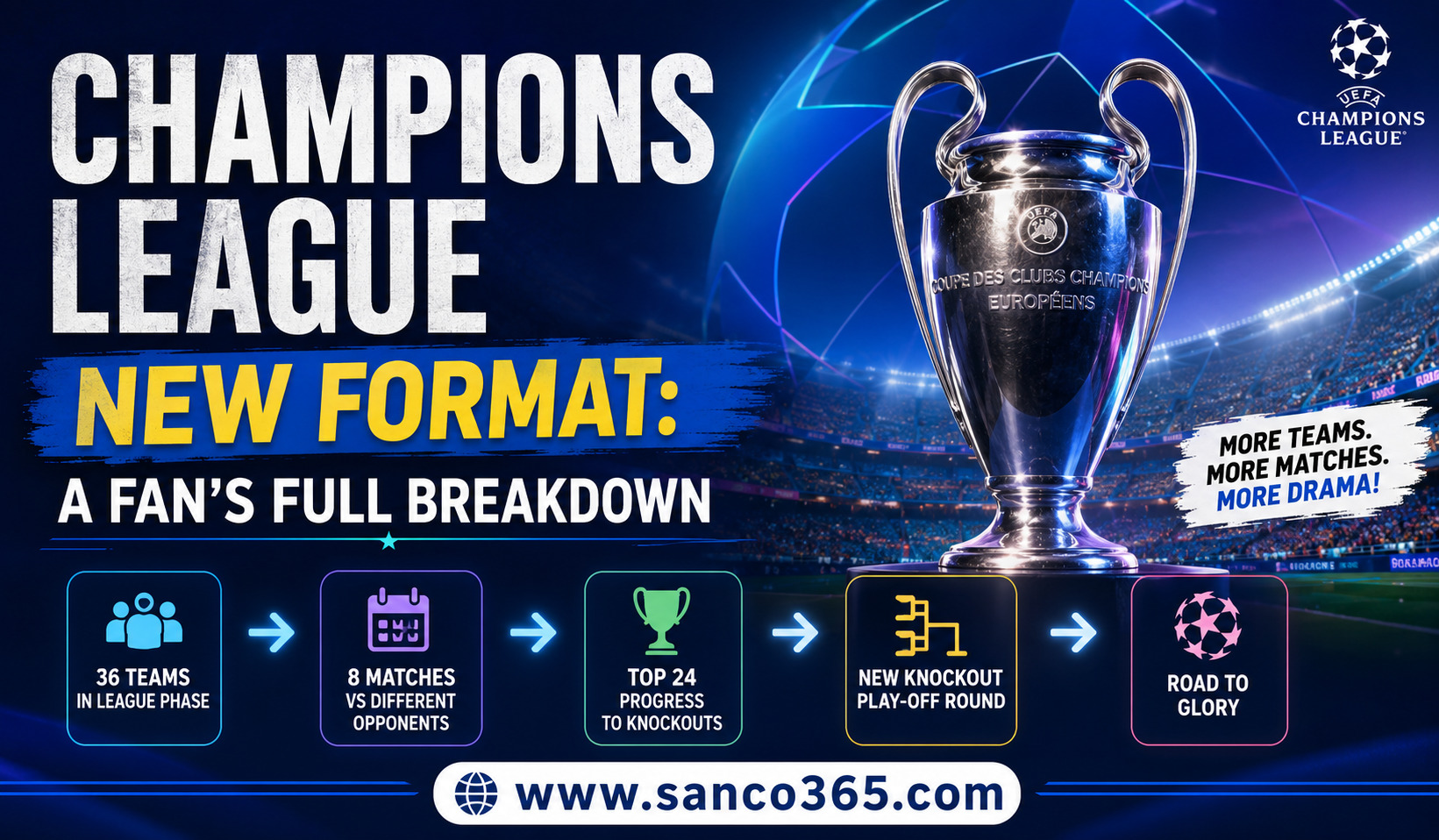
Nearly two full seasons into UEFA’s biggest shake-up in over two decades, plenty of football fans still get confused scrolling through a 36-team table instead of the familiar groups of four. The new Champions League format has changed how clubs qualify, how many games get played, and even how dramatic the final matchdays feel. Here is what actually changed, why UEFA pushed for it, and what it means for the way you watch European football now.
Why UEFA Scrapped The Old Group Stage
For over two decades, the Champions League ran on a simple setup: 32 clubs split into eight groups of four, playing each other home and away, with the top two from each group moving on. It worked fine for a while, but by the mid-2020s the format had a real problem. Too many matches meant nothing.
By matchday five or six in the old system, the strongest teams had already sealed qualification and the weakest were already out. That left a chunk of fixtures where neither side had anything to play for, and viewership numbers reflected it. UEFA needed a structure that kept more teams fighting for something deep into the group phase, and that search led them to the so-called Swiss model.
The name comes from Swiss-style tournament pairing, a system originally used in chess and later adopted by esports, where competitors are matched based on performance rather than being locked into a fixed bracket from day one. UEFA adapted the concept for football, and the result is the Champions League league phase we now watch every autumn.
How The New Champions League Format Actually Works
This is the part that trips up most casual fans, so it is worth breaking down step by step.
- The competition expanded from 32 clubs to 36 clubs
- Instead of small groups, every team sits in one giant single table called the league phase
- Each club plays eight matches total, four at home and four away, against eight different opponents
- Opponents are determined through a seeded draw using four pots of nine teams, with each club facing two sides from each pot
- The league phase now produces 144 total matches across eight matchdays, compared to 96 matches under the old group stage format
Instead of a home-and-away series against the same three opponents, clubs now get a much wider spread of matchups. A fan supporting a mid-table Bundesliga side might watch their club take on a Portuguese giant one week and an unfamiliar Turkish or Belgian club the next. That variety was one of UEFA’s main selling points, and it genuinely delivers more marquee fixtures earlier in the season than the old system ever did.
What The Table Zones Actually Mean
Once all eight matchdays wrap up, the single table splits into three clear zones, and this is where the format gets its real edge over the old group stage.
Positions one through eight qualify directly for the round of sixteen, no extra hurdles required. Positions nine through twenty four drop into a two-legged knockout playoff round to fight for the remaining spots in the last sixteen. Everyone ranked twenty five through thirty six is eliminated from Europe entirely, including any route into the Europa League.
That playoff zone is the most dramatic addition. A club can go from comfortably sitting in the automatic qualification zone after matchday six to scrambling in the playoff bracket by matchday eight if results swing the wrong way. It has already produced a few nervy final matchdays that the old format simply could not replicate, since under the previous system a team’s group was usually decided well before the final round of fixtures.
Qualification And The European Performance Spots Debate
Getting into the Champions League is still mostly about finishing high in your domestic league, but the new format introduced a genuinely controversial wrinkle: the European Performance Spots, often shortened to EPS.
These two additional places are awarded to the associations whose clubs performed best in European competition the previous season, on top of the automatic berths already granted through domestic league position. In practice, this has meant a handful of extra places for leagues like the Premier League, since English clubs have historically performed strongly across UEFA’s European competitions.
Critics argue this quietly rewards countries that are already dominant, making it slightly harder for emerging leagues to break into the tournament’s upper tier. Supporters of the change counter that rewarding consistent European performance makes competitive sense, since it reflects genuine strength across a season rather than a single lucky domestic campaign. Either way, it remains one of the more debated pieces of the reform, and it is worth watching how many extra Premier League or Serie A sides squeeze in through this route each year.
What This Means For Fans Watching At Home
The most obvious change for supporters is simply more football, and more of it that actually matters. Under the old format, a fan of a club sitting mid-group by matchday four had limited reasons to tune into other groups’ late fixtures. Now, since every club sits in one giant table, a result between two clubs your team has never even played can directly affect your side’s qualification chances.
It is a bit like fantasy football scoring, where a game you are not even watching can still shift your standings because of how the numbers ripple across the whole table. That interconnected drama is exactly what UEFA was chasing when it ditched the closed group system.
A few practical effects fans have noticed:
- More recognizable European giants appear on the fixture list earlier in the season
- Final matchday drama now regularly affects a much wider range of clubs, not just two teams fighting to escape a single group
- Broadcasters get more high-profile matchups to schedule across the season, since the pot system guarantees big-name pairings
- Travel demands on clubs and fans increased, since teams now face opponents from a wider geographic spread than the old regional groupings allowed
Criticism And Growing Pains Since The Change
Not everyone is thrilled with the reform, and the concerns raised before launch have mostly stuck around. European Leagues, the body representing over a thousand clubs across the continent, flagged worries about calendar congestion well before the format even debuted, and those concerns have not disappeared now that the system is in its second season.
Adding four extra matchdays to an already packed football calendar puts real strain on squads competing across domestic league, domestic cup, and European commitments simultaneously. Smaller leagues also worry the format quietly reinforces the dominance of Europe’s biggest clubs and richest leagues, since coefficient based seeding tends to reward historical success rather than current form.
There is also a simpler complaint: some fans still find the single table harder to follow at a glance compared to the old, tidy group of four format. It takes real attention across eight matchdays to know exactly where your club stands, rather than a quick scan of a four team mini table.
FAQ: Common Questions About The New Champions League Format
How many teams are in the Champions League now?
The competition expanded from 32 to 36 teams starting with the 2024-25 season, and that number has been retained through the following campaign.
How many games does each team play in the league phase?
Each club plays eight matches total: four at home and four away, against eight different opponents determined through a seeded pot draw.
What happens if a team finishes in the middle of the table?
Clubs finishing ninth through twenty fourth do not go straight into the knockout rounds. They enter a two-legged playoff against each other, and the winners advance to join the top eight in the round of sixteen.
Did the new Champions League format replace the group stage completely?
Yes. The traditional eight groups of four format used since the early 2000s was fully replaced by the single 36-team league phase starting in 2024-25, and there is no indication UEFA plans to return to the old group system.