sanco365seo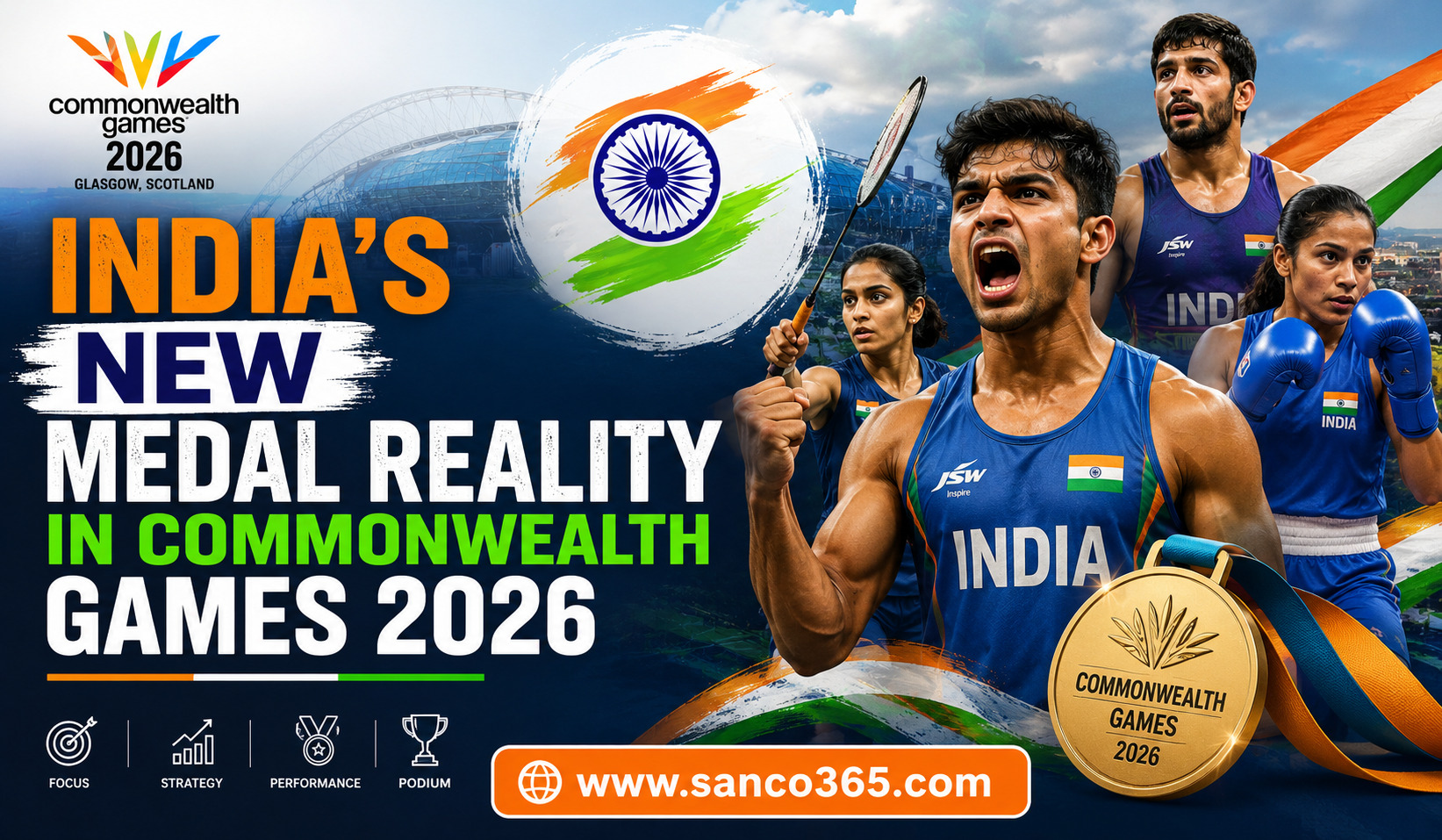
India walked away from Birmingham 2022 with 61 medals, and 25 of them came from just five sports that will not exist at this year’s Games. That is not a rounding error. That is a full quarter of the previous medal count, gone before a single athlete steps onto the track in Scotstoun Stadium. The Commonwealth Games 2026 in Glasgow is going to look, feel, and score completely different for India, and most fans have not fully processed what that means yet.
Why The Glasgow 2026 Sports List Looks So Different
The Commonwealth Games Federation did not trim the program for drama. Victoria, Australia was originally set to host, then pulled out over ballooning costs. Glasgow stepped in as a late replacement, and it only agreed to run the show on a leaner budget spread across four venues within eight miles of each other. Something had to give, and what gave was nine sports that featured in Birmingham just four years ago.
The Glasgow 2026 sports list now runs to just 10 core disciplines, with para variants of five of them folded in as an integrated program. That is the smallest Commonwealth Games program since 1994. Here is what actually made the cut:
- Athletics (track and field) and para athletics
- Swimming and para swimming
- 3×3 basketball
- Track cycling and para cycling
- Weightlifting and para powerlifting
- Lawn bowls and para bowls
- Artistic gymnastics
- Netball
- Boxing
- Judo
Sixteen sports in total once you count the para events, and Indian athletes will be competing across thirteen of them. Compare that to the twenty-sport buffet Birmingham offered in 2022, and you start to see why officials back home are worried about the Commonwealth Games 2026 turning into a much tighter fight for the podium.
The Wrestling Void: A Gold Mine India Cannot Mine This Time
Start with wrestling, because the numbers here are brutal. India picked up 12 medals in wrestling at Birmingham, six of them gold. That was not a lucky streak either. Wrestling has been part of the Commonwealth Games since 1930 and Indian grapplers have treated it almost like a home mat for two decades, building talent pipelines out of akhadas in Haryana and Punjab specifically with these Games in mind.
Losing wrestling from the Commonwealth Games 2026 program is a bit like a cricket team losing its top three batters right before a series. You can still win, but the margin for error just vanished. Athletes such as Bajrang Punia and Ravi Kumar Dahiya had already voiced frustration back when wrestling was first left off the initial sports list years ago, and that frustration has proven justified. There was no last-minute reprieve this time either.
What This Means For India’s Medal Tally
Every wrestling gold that used to be close to a formality now has to be replaced by performances from sports where India has a thinner track record at the Commonwealth level, like judo or 3×3 basketball. That is a genuinely different medal calculus, not a minor adjustment.
Hockey’s Absence Hits Different For A Sport India Practically Invented On The Global Stage
Hockey has been part of the Commonwealth Games continuously since 1998, and India’s men’s and women’s teams have treated every edition as a proving ground between Olympic cycles. Its exclusion from Glasgow 2026 is arguably the most emotional loss on this list, because hockey carries a cultural weight that goes beyond medal counting.
Practically speaking, hockey was never India’s most productive Commonwealth sport by medal volume, but it delivered something rarer: marquee moments. Think of the roar when the men’s team took down Australia or England in a final. Those matches pulled in viewers who otherwise skip the Games entirely. Without hockey on the Glasgow 2026 sports list, India loses both medal chances and a chunk of its broadcast pull, and neither is easy to replace with lawn bowls or artistic gymnastics, however competitive those disciplines may be.
Cricket’s Exit After Just One Comeback Feels Almost Cruel
Cricket only returned to the Commonwealth Games at Birmingham 2022 after a 24-year absence, played in the T20 format specifically to fit a tight multi-day window. The Indian women’s team reached that final and lost narrowly to Australia in a match that briefly made the Commonwealth Games relevant to cricket-first fans who normally could not care less about lawn bowls or judo.
Now cricket is gone again from the Commonwealth Games 2026 program, and the timing stings. It had barely proven it belonged before the door shut. For Indian fans who tuned in specifically to watch Harmanpreet Kaur’s side chase a title, this is one less reason to follow the Games at all, and organisers know it. Cricket’s absence is a reminder that a single successful comeback edition does not guarantee a permanent place on a shrinking, cost-conscious sports list.
Where India Can Still Realistically Strike Gold In Glasgow
It is not all bad news. India still has genuine medal shots, just concentrated in fewer baskets.
- Weightlifting remains a strong bet, with athletes in the mould of Mirabai Chanu carrying real podium expectations.
- Boxing should deliver, given India’s depth across multiple weight categories on both the men’s and women’s side.
- Judo is a newer frontier for India at this level, but recent Asian-level performances suggest it is not a lost cause.
- Athletics and para athletics offer breadth, from track sprints to field events, and India’s para athletes in particular have quietly built one of the country’s most consistent medal streams across recent multi-sport Games.
- Para swimming and para powerlifting deserve more attention than they usually get, because these are events where India already punches above its weight relative to its overall sporting investment.
The honest read is that India’s medal tally at the Commonwealth Games 2026 will likely lean harder on para sport performances and on boxing and weightlifting than it ever has before. That is a meaningful shift in strategy for the Indian Olympic Association, not just a footnote.
By The Numbers: What Birmingham Gave India That Glasgow Will Not
To really understand the scale of the change, look at what the nine excluded sports contributed just one cycle ago. Those sports produced 25 of India’s 61 total medals at Birmingham 2022, including 10 golds. Wrestling alone was responsible for 12 medals and six golds. Table tennis added five medals, three of them gold. Shooting, historically India’s single most productive Commonwealth Games sport, has actually been absent since Gold Coast 2018, so its exclusion this year is not new, but it still compounds the overall drop.
Add hockey, cricket, badminton, and squash to that pile of exclusions, and you get a picture of a Games where India has to fight much harder for a fraction of the medal total it is used to seeing on the scoreboard. Anyone predicting India will match or beat its Birmingham haul at Glasgow 2026 is either wildly optimistic or has not looked closely at the sports list.
FAQ: Your Quick Questions On Commonwealth Games 2026 Answered
Why was wrestling removed from the Commonwealth Games 2026?
Wrestling did not make Glasgow’s final 10-sport program because organisers cut the schedule down sharply for cost reasons after Victoria withdrew as host. Athletics, swimming, and eight other sports were prioritised instead, and wrestling did not survive the reduction.
Is cricket completely gone from future Commonwealth Games?
Not necessarily. Cricket was absent for 24 years before returning at Birmingham 2022, so its exclusion from Glasgow 2026 does not rule out another comeback at a future edition, though nothing is confirmed.
How many sports will India compete in at Glasgow 2026?
India is expected to compete across 13 of the 16 sports on the Glasgow 2026 program, which includes 10 core sports plus integrated para events in five of them.
Which sport is most likely to be India’s top medal earner in Glasgow?
Weightlifting and boxing appear to be India’s strongest bets heading into the Commonwealth Games 2026, alongside a meaningful medal contribution expected from para athletics and para swimming.